

Table of Contents
- What Makes Leather High Quality
- Full-Grain Leather vs Top-Grain Leather: Understanding the Difference
- How to Tell if Leather is Genuine
- Genuine Leather vs Faux Leather: What's the Real Difference
- The Leather Quality Checklist for Smart Buyers
- How Leather Quality Differs by Intended Use
- Safe Inspection Steps for In-Store and Online Purchases
- Understanding Tanning, Finishing, and Correction Processes
- Frequently Asked Questions
Last Updated: October 11, 2026
What Makes Leather High Quality
To spot high quality leather, start with the hide itself. The best leather comes from full-grain hides that retain the natural surface, grain patterns, and character marks of the animal.
Quality leather feels substantial and supple, with weight and density synthetics cannot match. Natural variation in texture and color are signs of authenticity, not defects.
Tanning and finishing determine quality. Premium leathers use traditional methods that preserve natural characteristics; cheaper leathers are heavily corrected and coated, limiting character development and risking finish cracking.
Full-Grain Leather vs Top-Grain Leather: Understanding the Difference
Full-grain leather is the highest quality option available. It includes the complete hide surface with all natural markings, grain patterns, and slight imperfections intact.
Top-grain leather has the outer surface sanded and refinished for uniformity. While durable and genuine, it cannot develop the character or patina of full-grain due to its protective coating.
Here's the practical difference:
- Full-grain: Natural grain visible, develops patina, shows character marks, requires proper care
- Top-grain: Uniform appearance, more stain-resistant, limited patina development, easier maintenance
- Split-grain: Lower layer of hide, less durable, often bonded to other materials
For furniture designed to last generations, full-grain is the clear choice. Our Tusk Leather Chair and Pate Leather Chair offer leather options across multiple grades to match your needs and lifestyle.

How to Tell if Leather is Genuine
Visual and Tactile Inspection
Genuine leather has visible, non-uniform grain patterns with natural color shifts and texture changes. Faux leather has repeating patterns from printing or embossing.
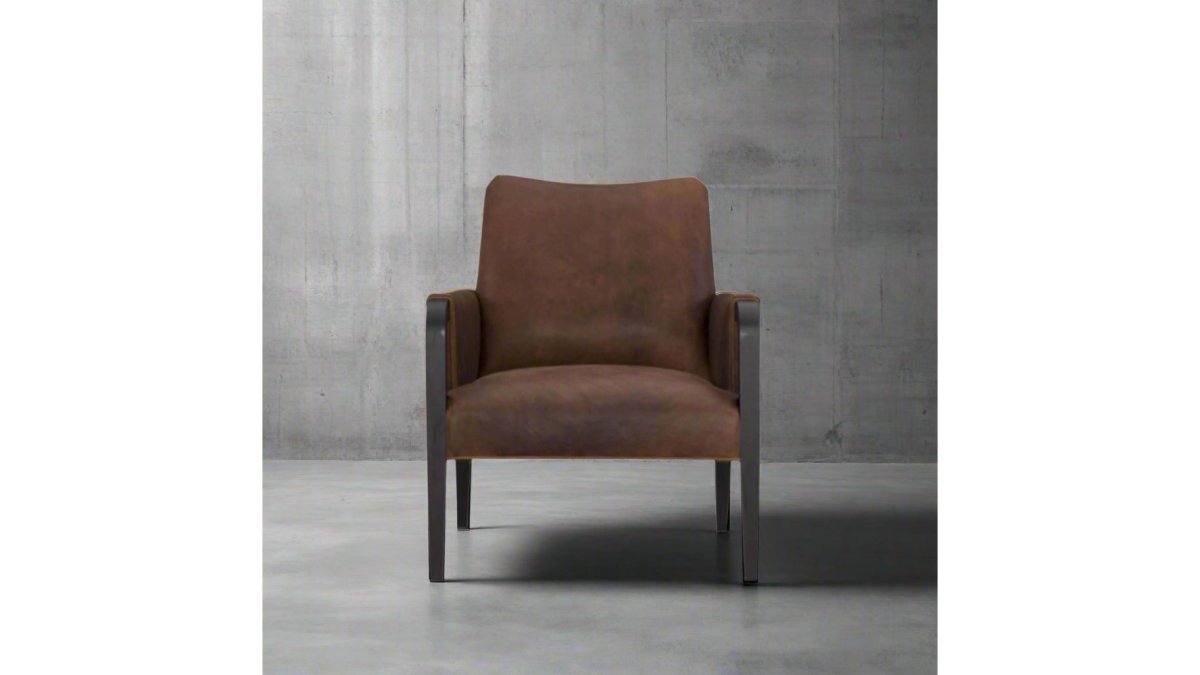
Real leather feels soft, slightly warm, and gives naturally when pressed. Synthetics feel plastic-like and cold.
Check the underside: genuine leather has a suede-like texture; bonded leather shows fabric backing; faux leather is uniform plastic.
What this test tells you: This inspection distinguishes genuine leather from obvious synthetics but cannot reliably distinguish full-grain from corrected top-grain or well-finished bonded leather.
The Smell Test
Genuine leather has a distinctive, natural (earthy or slightly sweet) smell from tanning and natural oils.
Faux leather smells chemical or plastic-like. New leather may smell stronger than aged leather, but the scent remains natural.
Heavy chemical finishes can mask natural smell and limit patina development, even on genuine leather.
What this test tells you: Smell filters obvious synthetics but cannot confirm grade or quality. Heavily finished genuine leather may smell chemical; engineered synthetics may smell like leather.
Edge and Seam Examination
Genuine leather shows visible fibers and layers at cut edges with texture and depth.
Faux leather has uniform plastic edges; bonded and split-grain leather reveal fabric or paper backing at edges and seams.
High-quality pieces have tight, even stitching with no gaps and leather lying flat around seams.
What this test tells you: Edge inspection reveals material composition reliably. For online purchases, request close-up photos of edges and seams; refusal is a red flag. In-store, ask to examine edges; legitimate retailers expect this.
Water Droplet Test: Proceed with Caution
Some guides recommend the water droplet test, but it's unreliable and risks damaging the leather.
Water-resistant coatings on genuine leather cause beading; water damage risks permanent marks. Many quality leathers resist water absorption by design.
Recommendation: Skip the water test. It cannot distinguish genuine from synthetic or determine grade, and risks damage. Ask the seller about finish type and water resistance instead.
Genuine Leather vs Faux Leather: What's the Real Difference
Genuine leather is made from animal hide processed through tanning. Faux leather is polyurethane, PVC, or other synthetic polymers designed to mimic leather's appearance.
The key differences matter for durability and aging:
| Aspect | Genuine Leather | Faux Leather |
|---|---|---|
| Durability | 15-40 years with care | 3-7 years typical |
| Breathability | Naturally breathes | Traps moisture |
| Patina Development | Improves with age | Cracks and peels |
| Repairability | Can be conditioned and repaired | Difficult to repair |
| Environmental Impact | Natural, biodegradable | Synthetic waste |
| Initial Cost | Higher | Lower |
Genuine leather develops character and ages beautifully. Faux leather cracks, fades unevenly, and becomes brittle.
For pieces kept decades, genuine leather is essential. Faux leather suits temporary purchases but lacks longevity and aesthetic appeal.
The Leather Quality Checklist for Smart Buyers
Use this checklist to spot high quality leather when evaluating furniture:
- Visible grain variation across the surface (not uniform pattern)
- Soft, supple feel with natural give when pressed
- Distinctive natural leather smell (not chemical or plastic)
- Visible fibers and texture at cut edges
- Tight, even stitching with no gaps or separation
- Full-grain or top-grain designation (avoid bonded or split)
- Leather thickness of at least 1.2mm (thinner feels cheap)
- No plastic coating that prevents the leather from breathing
- Natural color variation and slight surface marks
- Manufacturer transparency about leather grade and origin
For online orders, request detailed photos of edges, seams, and surfaces from multiple angles.
How Leather Quality Differs by Intended Use
Match leather grade to intended use.
High-traffic furniture needs stain-resistant leather. Top-grain resists spills better than full-grain. Our Fae Dining Chair features thick-cut nude top-grain leather for daily use.

Statement pieces can showcase full-grain leather, which benefits from less contact and develops character and patina as part of design appeal.
Frequently touched areas (armrests, arms, headrests) should be supple and soft. Full-grain ages into buttery softness top-grain cannot match. The MONZA Dining Chair features graphite top-grain leather for sophistication and durability.
Safe Inspection Steps for In-Store and Online Purchases
In-Store Inspection
Sit and move around to feel how leather responds to pressure. Quality leather flexes naturally without cracking sounds.
Check seat, back, armrests, and underside for consistency. Run fingers along seams and edges for gaps, separation, or rough spots.
Critical questions to ask the retailer:
- Leather grade: Ask for the specific grade (full-grain, top-grain, split-grain, bonded). If the label says only "genuine leather" without a grade, ask why. Transparency about grade indicates confidence in the product.
- Tanning method: Ask whether the leather was vegetable-tanned, chrome-tanned, or a combination. Vegetable-tanned leather will develop visible patina over time; chrome-tanned leather offers more consistent color but limited aging character.
- Finishing process: Ask about the protective coating. Is it a light finish that allows the leather to breathe, or a heavy plastic-like coating? Heavy finishes resist stains but prevent patina development.
- Correction level: For top-grain leather, ask whether the surface has been sanded and refinished to hide natural marks. This is normal for top-grain but worth understanding.
- Thickness: Ask for the leather thickness in millimeters. Quality leather for furniture is typically 1.2mm or thicker. Anything thinner than 1mm will feel cheap and wear faster.
- Origin and supplier: Reputable manufacturers can name their leather supplier or region of origin. This transparency matters for both quality assurance and ethical sourcing.
- Care requirements and warranty: Ask what maintenance the leather requires and whether the retailer offers a warranty. Quality retailers stand behind their products with clear care instructions and reasonable warranty periods.
Ask about expected aging: will it develop patina or maintain uniform appearance? This reveals whether the product prioritizes character or stain resistance.
Online Purchases
Request high-resolution photos of surface, edges, seams, and underside. Look for natural grain variation and visible texture.
Legitimate sellers specify leather type, grade, tanning method, and finishing. Vague descriptions without grade are red flags; contact the seller before purchasing.
Questions to ask online retailers:
- Request photos of cut edges or seams: Ask for close-up images showing the edge of the leather and any visible seams. These photos reveal whether the material is solid leather or bonded/split construction.
- Ask about the finish: Inquire whether the leather has a protective coating and, if so, how heavy it is. Ask whether the finish will change appearance over time or remain uniform.
- Confirm the tanning method: Ask whether the leather was vegetable-tanned or chrome-tanned. This detail affects both aging and care requirements.
- Request samples if available: Some online retailers offer leather swatches or samples. Request one if the product page does not show the actual color and texture clearly.
- Clarify the return policy: Quality retailers offer extended return windows for furniture (typically 30 days or longer) because they stand behind their products. A short or restrictive return policy suggests the seller is not confident in quality.
- Ask about care and conditioning: Request the seller's recommended care routine. Legitimate sellers provide detailed care guides because they expect the leather to last and develop character.
Check reviews for mentions of leather quality, aging, and durability. Real-world observations are more reliable than marketing claims.
Red Flags in Labeling and Seller Responses
- "Genuine leather" with no grade specified: This term is legally meaningless in many contexts and can refer to any leather, including bonded or heavily corrected material. Always ask for the specific grade.
- "Leather-like" or "faux leather" marketed as premium: These are synthetics. They are not leather and will not age or develop character.
- "Corrected grain" or "pigmented leather" without context: These terms indicate the surface has been sanded and refinished. This is normal for top-grain but should be disclosed clearly.
- Sellers who cannot answer questions about tanning or finishing: If a retailer cannot explain their leather's processing, they may not know the details themselves, a sign of low quality control.
- Photos that show only one angle or surface: Legitimate sellers provide multiple angles and close-ups. Limited photography often hides construction details.
- Prices significantly lower than comparable products: Leather furniture that is priced far below market rate often uses lower-grade leather, synthetic blends, or poor construction. Quality leather and craftsmanship have real costs.
Understanding Tanning, Finishing, and Correction Processes
Vegetable tanning uses natural tannins over weeks or months, preserving character and allowing patina development.
Chrome tanning is faster and cheaper but limits aging characteristics. Quality leathers often combine both methods to balance consistency with character.
Light finishes preserve natural feel and breathability; heavy finishes resist stains but prevent patina development.
Correction processes sand and refinish the leather surface to hide natural marks. Full-grain leather skips this step.
Understanding these processes helps you evaluate what you're buying. Full-grain leather with light vegetable tanning will age beautifully.
When you're investing in furniture designed to last generations, understanding leather quality isn't optional, it's essential. Our handcrafted pieces like the Tusk Leather Chair combine premium leather with hardwood frames and eight-way hand-tied spring systems built to age beautifully.

Frequently Asked Questions
What's the difference between full-grain leather and top-grain leather?
Full-grain leather retains the complete hide surface with all natural grain patterns and imperfections intact, making it more durable and developing a richer patina over time. Top-grain leather has the outer surface sanded and refinished, removing natural marks but creating a more uniform appearance. Full-grain is generally more durable and valuable, while top-grain offers a cleaner aesthetic. Both are genuine leather, but full-grain typically commands higher prices and lasts longer with proper care.
How can you tell if leather is genuine versus synthetic?
Genuine leather has a distinct natural smell, earthy and rich, while synthetic alternatives often smell plastic or chemical. When you feel genuine leather, it's warm to the touch and develops a natural patina with age. Check the edges and cut surfaces: genuine leather shows visible fibers and layers, while faux leather has a uniform backing. Look at the grain pattern; genuine leather varies naturally across the hide, whereas synthetic materials repeat patterns. Product labels should clearly state the leather type and grade.
What should I look for on a leather quality checklist when buying furniture?
Inspect the grain pattern for natural variation and avoid overly uniform surfaces. Feel the thickness and firmness, quality leather is substantial and doesn't feel thin or flimsy. Check seams and stitching for tight, even construction. Examine cut edges for visible fibers rather than a uniform backing. Look at the color consistency; some natural variation is normal and desirable. Ask about the leather grade and tanning method. Verify the hide quality by checking for minimal surface defects. Finally, confirm the product comes with proper care instructions and durability guarantees.
Does high-quality leather have a natural smell?
Yes, authentic leather has a distinctive natural smell that's often described as earthy, warm, or rich. This scent comes from the tanning and finishing processes used to treat animal hides. Synthetic leather typically smells plastic or chemical, which is one of the easiest ways to identify faux materials. The smell of genuine leather is one of the most reliable non-destructive tests you can perform, whether shopping in-store or inspecting a piece after delivery. If something claims to be leather but smells artificial, it's likely synthetic or heavily treated with coatings that mask the natural hide.