

Table of Contents
- Before You Start: What You'll Need to Return Custom Furniture
- Step 1: Understand the Custom Furniture Return Policy
- Step 2: Check Your Furniture Return Window and Deadlines
- Step 3: Submit Your Furniture Return Request Letter
- Step 4: What to Do When Custom Furniture Arrived Damaged
- Step 5: Prepare Oversized Furniture for Return Pickup or Shipping
- Step 6: Track Your Refund, Restocking Fees, and Payment Method
- Pre-Purchase Checklist to Avoid Needing a Custom Furniture Return
- Frequently Asked Questions
Last Updated: October 13, 2026
Before You Start: What You'll Need to Return Custom Furniture
Returning a made-to-order sofa is not like sending back a shirt. Custom furniture is built to your specifications, so the return process depends on why you're returning it and what the seller's policy allows. This guide walks you through how to return custom furniture step by step, from reading the policy to tracking your refund.
Gather these items before you contact anyone:
- Your order number and proof of purchase
- Photos of the item, including any damage or defects
- The original delivery receipt or bill of lading
Having these ready speeds up every step that follows.
Step 1: Understand the Custom Furniture Return Policy
Every custom furniture return policy splits returns into two groups: change-of-mind returns and problem returns. The first group is optional for the seller. The second group is your right as a buyer. Knowing which one applies to you changes everything about how the process works.
Change-of-Mind Returns vs. Defect, Damage, or Seller Error
A change-of-mind return means you simply don't want the piece anymore. Maybe the color reads differently in your room, or the measurements don't work the way you hoped.
A defect, damage, or seller error return is different. If the furniture arrived cracked, the fabric is wrong, or the dimensions don't match your order, the seller is usually responsible for the full cost of the return and replacement.
- Change of mind: You pay return costs, and a restocking fee may apply
- Defect or damage: Seller covers return shipping and replacement
- Seller error: Wrong item or wrong specs, seller fixes it at no cost to you
Step 2: Check Your Furniture Return Window and Deadlines
The furniture return window is the deadline for starting your return, and it usually runs from the delivery date. Common windows are 30, 60, or 90 days, though custom orders often get shorter terms than stock items. Check your order details or contact customer service to confirm your exact deadline.
Return Rights by Purchase Method
Your return rights depend partly on how you paid and where you bought the piece.
- Credit card: Many cards extend return protection beyond the seller's window
- Debit card: Fewer protections, so act within the seller's window
- Financing: Returning the item does not always cancel the loan, so call the lender too
Under FTC rules on mail, internet, and telephone order merchandise, sellers must ship orders by the promised date or give you the option to cancel. That matters if your custom piece arrived months late.
Step 3: Submit Your Furniture Return Request Letter
A furniture return request letter is a short, written message that starts the return and creates a record. Send it by email so you have a timestamp. Keep it factual and include your order number, the reason for the return, and what outcome you want.
Here is a template you can copy and fill in:
Subject: Return Request, Order #[Order Number]
Hello,
I am requesting a return for Order #[Order Number], delivered on [Delivery Date]. The item is [Item Name].
Reason for return: [Change of mind / Damage / Defect / Wrong item]
I have attached photos and my delivery receipt. Please send me a return authorization number and tell me the next steps, including any return shipping or restocking fees.
Thank you, [Your Name] [Phone Number]
Once the seller replies with a return authorization (RA) number, write it on the outside of every package and keep it for your records.
Step 4: What to Do When Custom Furniture Arrived Damaged
When custom furniture arrived damaged, act fast. Report the damage within the seller's stated window, usually a few days from delivery, and do it in writing. Waiting too long is the most common reason damage claims get denied.
How to Document Damage with Photos and a Bill of Lading
The bill of lading is the delivery receipt you signed when the furniture arrived. It lists the item and its condition at handoff. If you noted damage on it, your claim is much stronger.
Document the damage like this:
- Photograph the damage up close and from a few feet back
- Photograph the packaging, including any crushed or torn corners
- Photograph the shipping label and the bill of lading
- Note the date, time, and who delivered the item
- Email everything to customer service the same day
If you signed the bill of lading without noting damage, you can still file a claim. Just explain that the damage was hidden until you unpacked the piece.
Step 5: Prepare Oversized Furniture for Return Pickup or Shipping
Large furniture items need real preparation before pickup. A delivery team will not take a piece that is loose, unwrapped, or blocking a doorway. Set aside an hour and do it right the first time.
Measure the Exit Path Before You Move Anything
The piece came in, so it can go out, but only if you reverse the exact path it took. Before pickup day:
- Walk the route from the room to the truck and note every tight turn, stairwell, and door frame
- Measure the narrowest point on that route and compare it to the piece's widest dimension
- Remove doors from hinges if a frame is the bottleneck, and label the hardware
- Protect floors and corners with moving blankets or cardboard along the path
If the piece was delivered fully assembled and will not fit back out assembled, ask the seller whether the pickup crew will disassemble it or whether you are expected to.
Disassemble Only What the Seller Allows
Disassembly can void a return if the seller considers it modification. Confirm in writing before you remove anything.
- Safe to remove: Legs, shelves, hardware, and cushions that were shipped separately or clearly designed to detach
- Ask first: Anything glued, stapled, or structurally joined
- Never do: Cut, sand, or alter the piece to make it fit through a doorway
Bag and label every screw, bolt, and small part. Tape the bag to the piece so it cannot be lost in transit.
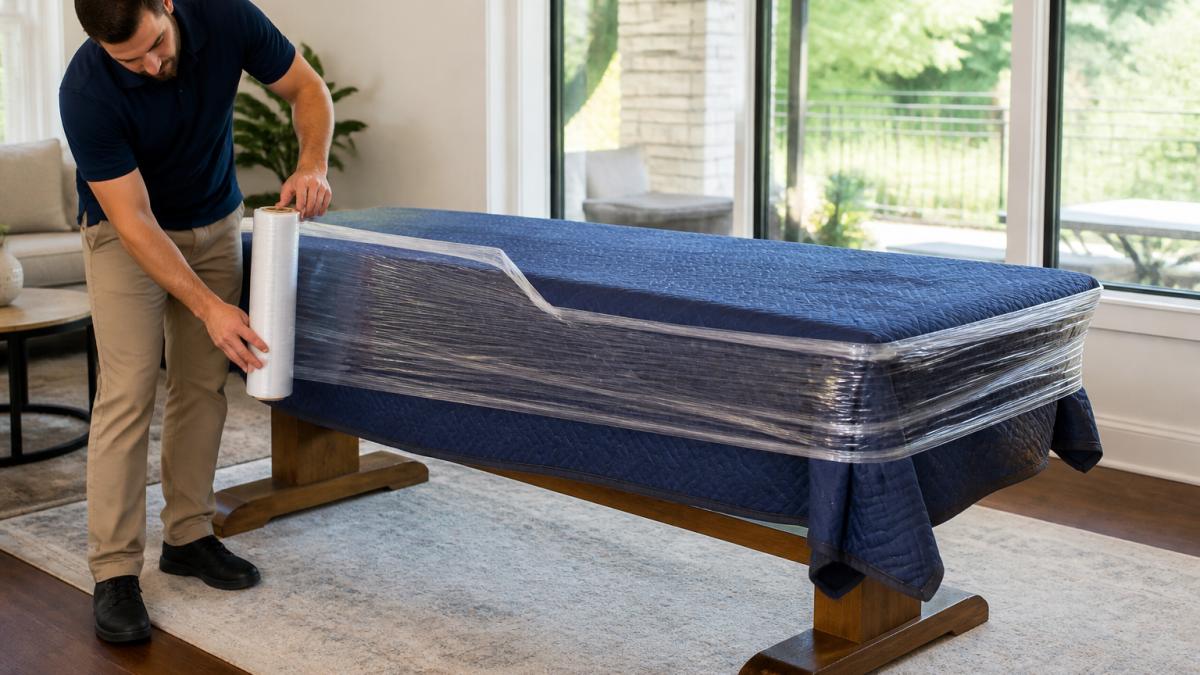
Wrap for Transit, Not Just for Storage
Storage wrapping and transit wrapping are different jobs. Transit wrapping has to survive a truck ride:
- Wrap the piece in moving blankets or furniture pads first
- Cover the blankets with stretch wrap or shrink wrap, overlapping each pass
- Tape the wrap so nothing shifts, but avoid tape directly on wood, leather, or fabric
- Pad corners and edges separately, they take the most impact
- Photograph the wrapped item from several angles before pickup
Keep the original packaging if you have it. It fits best and protects the piece best. If you tossed it, ask the seller whether they will supply replacement packaging or send a crew to pack it for you.
Who Is Liable Once It Leaves Your Home
This is the part most guides skip. Once the carrier takes possession, damage in transit is usually the carrier's or the seller's responsibility, but only if you can prove the piece left in good condition.
- Photograph the wrapped item and the pickup paperwork at handoff
- Get the driver's name, the carrier name, and a copy of the pickup receipt
- Note the condition of the item on the pickup paperwork before you sign
If the seller arranged the pickup, the seller generally owns the transit risk. If you arranged and paid for the carrier, the risk usually shifts to you. Confirm which applies before pickup day.
Step 6: Track Your Refund, Restocking Fees, and Payment Method
A refund usually lands after the seller inspects the returned item, not when the truck picks it up. That inspection can take a week or more. Ask for the expected timeline in writing so you know when to follow up.
How Restocking Fees Are Actually Calculated
A restocking fee is rarely a flat dollar amount. Most sellers calculate it in various ways, and the method matters more than the percentage:
- Percentage of item price: Common on change-of-mind returns. A 15% fee on a $2,000 sofa is $300.
- Percentage of the full order: Applies when the order included multiple pieces, so the fee scales with everything, not just the returned item.
- Flat fee per item: More common on oversized pieces because the seller's real cost is handling and re-warehousing, not the item value.
Ask which method applies before you authorize the return. A fee quoted as a percentage can look small until you apply it to the full order total.
What Gets Refunded and What Usually Does Not
- Item price: Refunded on approved returns, minus any restocking fee
- Original outbound shipping: Often non-refundable on change-of-mind returns, refundable on defect or seller error
- Return shipping: Yours on change of mind, the seller's on damage or error
Refund Timing by Payment Method
Refund speed depends on how you paid, not just on the seller:
- Credit card: The seller issues the credit, then the card issuer posts it. Expect the seller's inspection window plus a few business days for the credit to appear.
- Debit card: Similar to credit, but the money returns to your checking account rather than reducing a balance, so the timing feels longer.
- Financing: Returning the item does not automatically cancel the loan. Call the lender and confirm in writing that the balance is cleared and no further payments are due.
How to Dispute a Short or Missing Refund
If the refund arrives smaller than expected, do not assume it is final. Ask the seller for a written breakdown of every deduction. Compare it against the fee terms you were given before the return.
If the seller will not resolve it, State consumer protection offices can help, and for larger disputes small claims court is an option in most areas.
Pre-Purchase Checklist to Avoid Needing a Custom Furniture Return
The best return is the one you never have to make. Custom pieces are built for you, so a few minutes of prep before ordering saves weeks of hassle later.
- Measure your space, doorways, and stairwells, not just the room
- Order fabric or leather swatches and view them in your own light
- Review the warranty terms for solid wood, leather, and joinery
At Hedi's Furniture, every piece is handcrafted from solid woods, natural fibers, and full-grain leathers, and we back our work with a Lifetime Warranty Guarantee. That guarantee exists because we build furniture meant to last for generations, not seasons.
Frequently Asked Questions
Can I return custom furniture if it does not fit my space?
If the piece was made to your provided measurements and the fit issue is due to your own measurement error, most return policies treat this as a change-of-mind return. That means you may be responsible for return shipping costs and a restocking fee. If the retailer made the piece to the wrong dimensions, that is a seller error and you should not bear those costs. Always confirm fit measurements in writing before ordering.
What should I do if custom furniture arrives damaged or defective?
Document the damage immediately with clear photos of the packaging and the item itself. Note any visible damage on the delivery receipt or bill of lading before the driver leaves. Then contact customer service within the furniture return window to file a damage claim. Keep all original packaging until the claim is resolved, as the retailer may require it for inspection or return shipping.
Who pays for return shipping on custom furniture?
For change-of-mind returns, the customer typically covers return shipping or pickup costs, and a restocking fee may apply. When the return is due to a defect, damage, or incorrect order, the retailer usually arranges and pays for pickup. Some brands offer free returns as part of their policy. Always check the specific custom furniture return policy before initiating a return request.
What can I do if a furniture retailer refuses my return?
Start by submitting a written furniture return request letter that references your order details and proof of purchase. If the retailer still refuses, escalate to a manager or file a complaint with your state attorney general's office or the Better Business Bureau. For unresolved disputes, small claims court is an option. Keep copies of all correspondence, photos, and delivery receipts as evidence.
Custom furniture is an investment, and a return should never feel like a gamble. When you buy from a maker who stands behind the craft, the process stays simple. Hedi's Furniture offers free returns, free shipping on orders over $100, and complimentary design guidance to help you get the measurements and materials right the first time. Shop the sofa collection and furnish your home with pieces built to age beautifully.